How to configure an organic fertilizer production line? Proper selection and matching of disc granulators

To build an efficient organic fertilizer production line, the proper selection of a disc granulator and its supporting equipment are crucial, directly impacting the overall production efficiency and product quality.

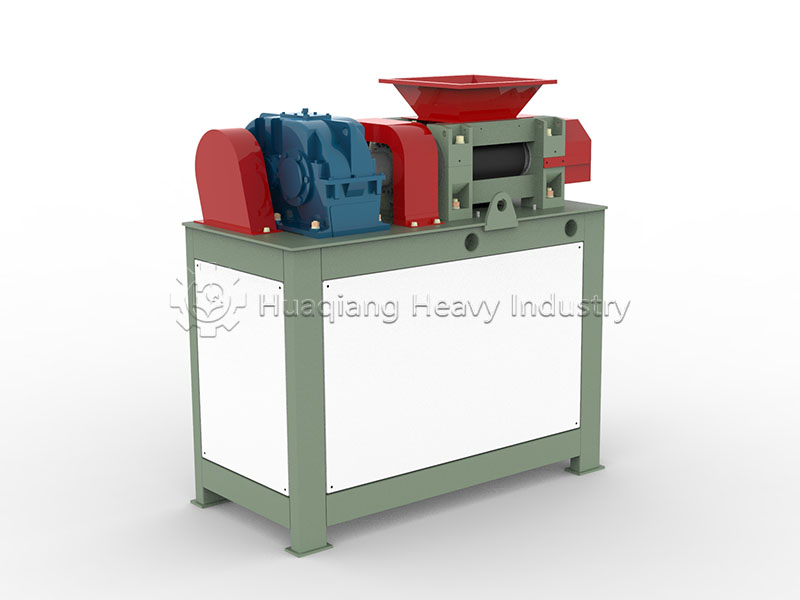
When selecting a disc granulator, the specifications of the disc granulator should be determined based on the production capacity requirements of the fertilizer production line. If the production line has a low capacity, a machine with a moderate processing capacity can be selected. If the production capacity requirements are high, a disc granulator with a high processing capacity should be used to ensure that the granulation process is compatible with the overall production capacity and avoid capacity bottlenecks.

Furthermore, the type of fertilizer being produced, such as organic fertilizer or NPK compound fertilizer, should be considered. Different types of fertilizer raw materials have different characteristics, so an appropriate disc granulator must be selected to ensure optimal granulation results.

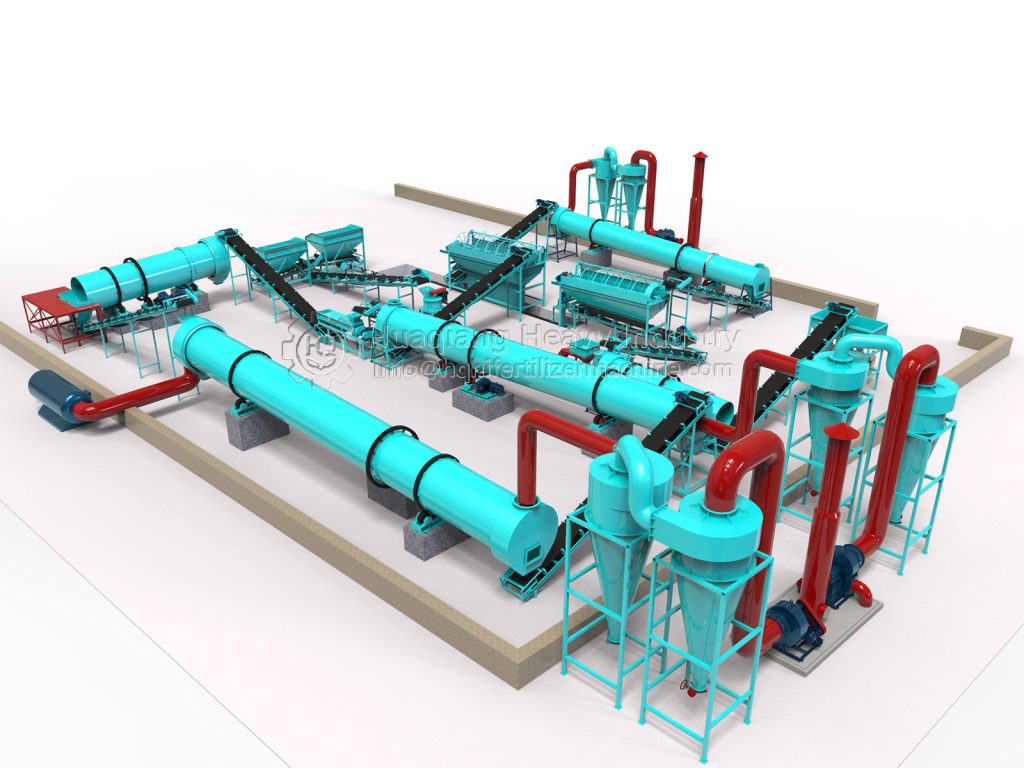
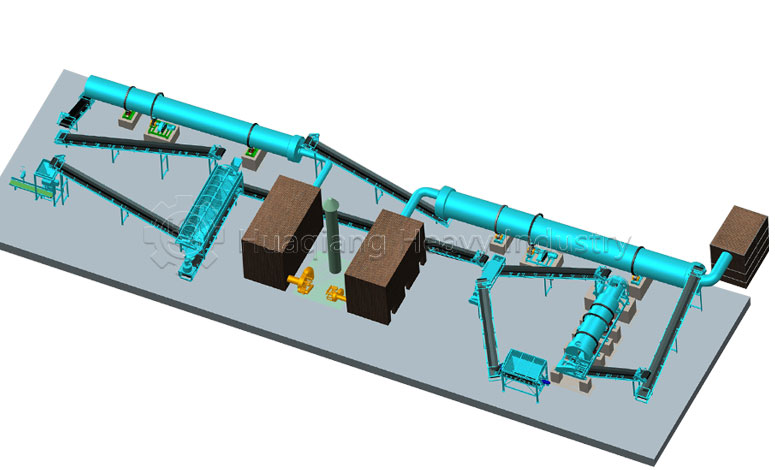
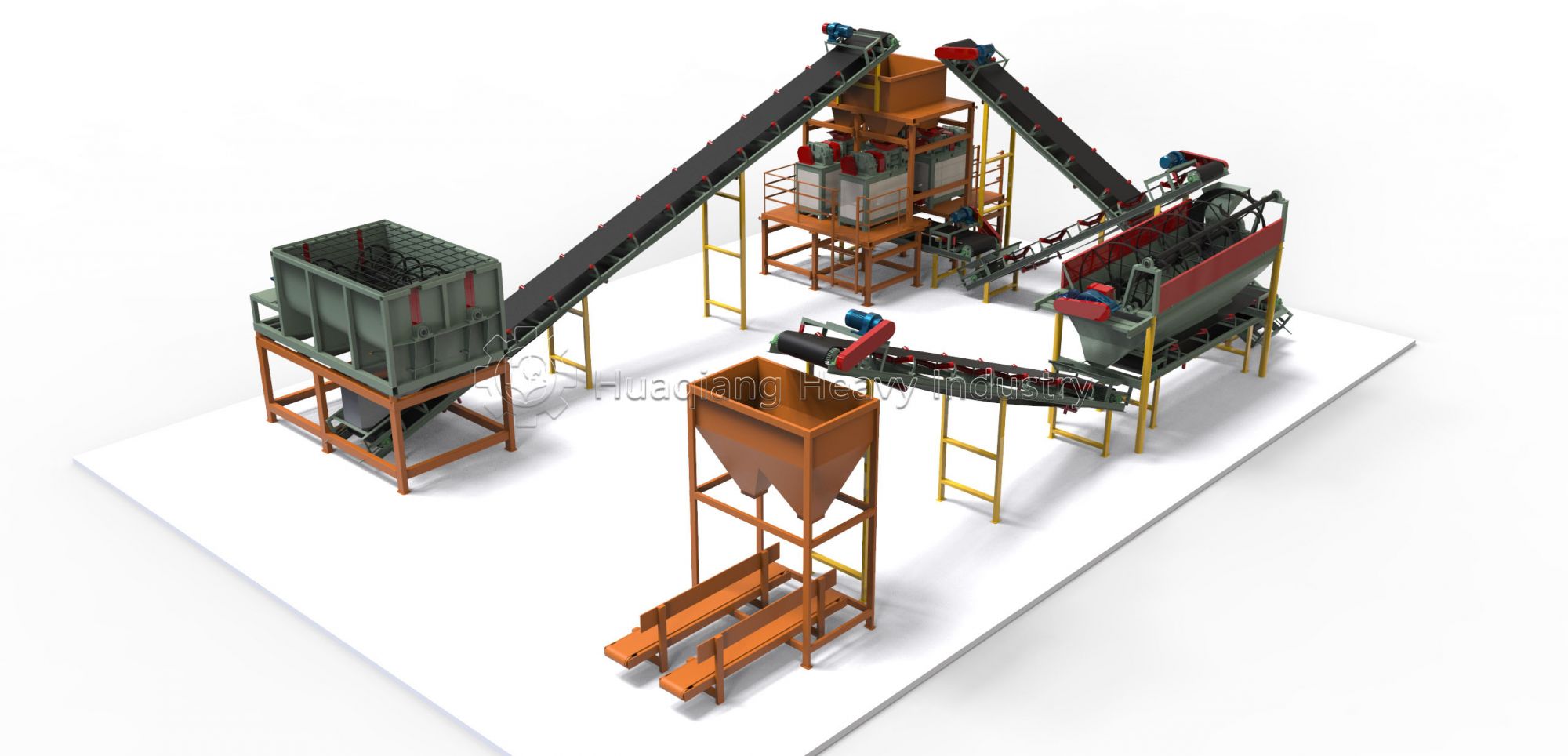
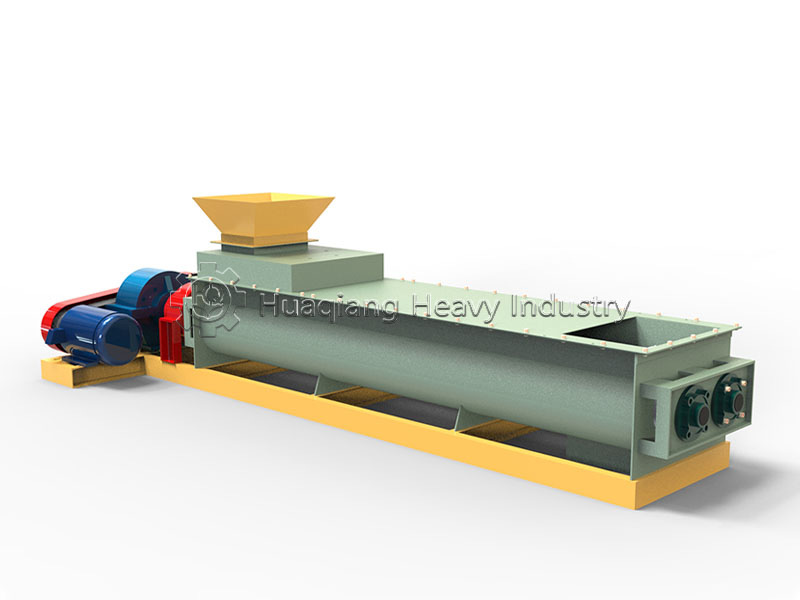
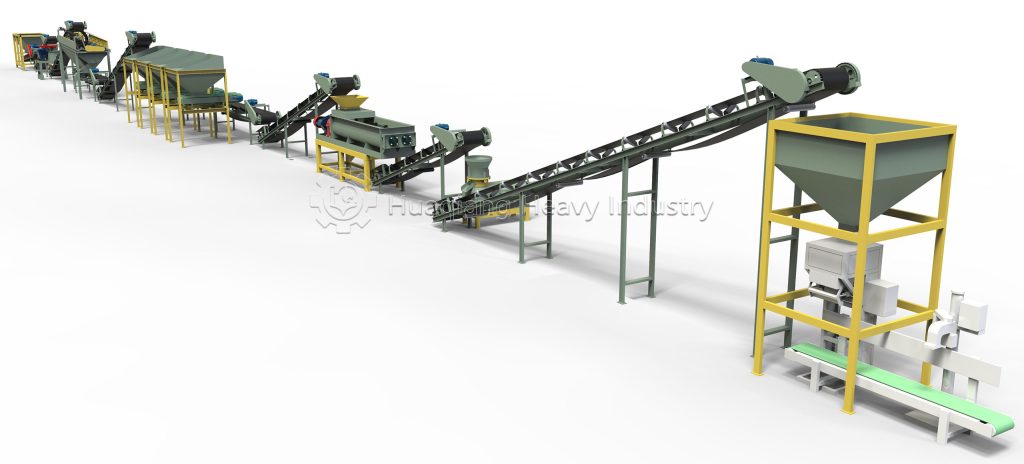
The selection of supporting equipment is also crucial. In a fertilizer production line, a disc granulator must work in conjunction with other equipment such as a fertilizer crusher, mixer, screener, dryer, and packaging machine. The pulverizer crushes the raw materials to the appropriate particle size, preparing them for granulation; the mixer ensures that the raw materials are evenly mixed; the screening machine screens the granulated particles and separates unqualified particles; the dryer reduces the moisture content of the particles for easy storage; and the packaging machine completes the final product packaging.

The rational combination of these supporting equipment can form a complete and efficient fertilizer production process, improve the automation level and production efficiency of the entire production line, and create greater value for the enterprise.

How to Build the Perfect Fertilizer Production Line? Granulation is the Key!

In modern agricultural production, the quality of compound fertilizers directly affects crop yields and soil health. The segregation of components in multi-component mixed products has long been a technical challenge for fertilizer manufacturers. Excitingly, advanced granulation technology has successfully solved this problem across various production systems! This process is fundamental to both a standard npk fertilizer production line and sophisticated bio organic fertilizer production, converting raw materials into uniform granules to prevent component segregation. Whether it’s a complex organic fertilizer production line or a simpler bulk blending fertilizer line, this technology ensures quality stability. It boasts wide raw material adaptability, achieving ideal granulation effects for compound fertilizers, pharmaceuticals, chemical materials, or feed, fundamentally ensuring product consistency from batch to batch.

Why Choose Granulation Technology?

The most notable advantage of granulation technology lies in its excellent granulation rate, enabling the production of various concentrations and types of fertilizer products. From organic-inorganic compound fertilizers to biofertilizers, from high-concentration compound fertilizers to special functional fertilizers, an advanced granulation production line can handle them all with ease.

Imagine your production line could flexibly switch between producing different fertilizer formulations without worrying about component segregation or quality fluctuations—this is exactly the transformative advantage brought by granulation technology!

What Key Equipment Does a Complete NPK Fertilizer Production Line Include?

A complete modern NPK fertilizer production line is a perfect combination of multiple precision equipment:

  • Automatic batching machine– Precisely controls various material ratios
  • Belt conveyor– Achieves efficient and smooth material transportation
  • Mixer– Ensures thorough and uniform mixing of raw materials
  • Crusher– Processes materials to ideal particle size
  • Rotary drum granulator– Core granulation equipment for high-quality granule formation
  • Dryer– Removes excess moisture from granules
  • Cooler– Cools granules for subsequent processing
  • Screening machine– Grades and selects qualified granules
  • Coating machine– Enhances granule performance and prevents caking
  • Automatic packing machine– Achieves efficient and precise product packaging

This highly automated production line not only significantly improves production efficiency but, more importantly, ensures every fertilizer granule meets strict quality standards. From raw material processing to finished product packaging, every step is carefully designed to guarantee product consistency and reliability.

For fertilizer manufacturers pursuing excellence, investing in such a modern NPK fertilizer production line is undoubtedly a wise choice to enhance product competitiveness and win market share!

Paddle Mixer Pelletizer: The Artisan of Gentle Granulation

In the field of advanced granulation, the paddle-type mixing granulator stands out as a core fertilizer equipment. Like a skilled sculptor, it uses its unique “art of mixing” to shape loose materials into perfect granules. Also known as a tooth-type mixing granulator or a new type two-in-one organic fertilizer granulator, the paddle-type mixing granulator is a key equipment in fertilizer production, especially in biofertilizer production, where its gentle process effectively preserves the vitality of microorganisms. Unlike traditional extrusion molding, it relies on high-speed rotating blades to form granules through a natural balance between centrifugal force, friction, and viscosity, making it ideal for sensitive organic and biofertilizer formulations.

Core Advantage: No high-pressure extrusion required. The granulation process is like a “gentle massage,” especially suitable for protecting active ingredients and fiber structures, producing round and plump granules with particle size uniformity exceeding 90%.

Fertilizer Production: Organic Waste Transformation

Converts malodorous livestock manure into odorless granular organic fertilizer, solving caking issues

Gentle process ensures >85% microorganism survival rate, ideal for bio-organic fertilizer

Enables precise addition of trace elements for “customized” specialty fertilizers

Chemical Industry: Expert for Viscous Materials

Dyes and pigments achieve 50% better flowability after granulation, eliminating dust pollution

Uniform catalyst granule strength improves chemical reaction efficiency by 20%

Various chemical additives extend shelf life by 6-12 months after granulation

Pharmaceutical & Feed: Guardians of Quality

Chinese medicine granules retain up to 95% active ingredients, far surpassing traditional methods

Pharmaceutical excipients achieve 98% mixing uniformity after granulation

Aquafeed granules maintain integrity in water, improving feed conversion rate by 15%

From farms to factories, from medicine to feed, paddle mixer pelletizers are redefining granulation standards with their gentle process and excellent adaptability. They’re not just equipment, but an art form that perfectly combines material properties with processing techniques.

Windrow compost turners: The “Connecting Key” of organic fertilizer production lines

In organic fertilizer production lineswindrow compost turners play a crucial role, connecting raw material pretreatment with further processing. They are core equipment, providing strong support for the efficient operation of the production line.

From a process perspective, pretreated raw materials, after crushing, mixing, and adjusting the carbon-nitrogen ratio, are transported to the fermentation area and piled into windrows. The windrow compost turner efficiently turns the windrow compost to complete the fermentation process. The composted materials are then conveyed by conveyor to downstream processing stages such as crushing, granulation, and drying. This forms a continuous production chain of “pretreatment-fermentation-further processing,” avoiding process interruptions and ensuring high-quality raw materials for subsequent steps.


For large-scale production lines, this equipment is crucial for achieving continuous production. For example, in large-scale production lines with an annual production capacity of over 50,000 tons, windrow compost turners can employ a “multi-zone rotation” model, simultaneously serving multiple windrow zones for new material loading, high-temperature fermentation, and cooling and composting operations. The equipment operates on a fixed cycle, with an average daily processing capacity of 800-1500 tons, easily meeting the needs of large-scale production.

Furthermore, the equipment flexibly adapts to the production line’s rhythm, with its electronic control system enabling infinite adjustment of travel speed and tossing frequency. As the downstream pelletizer’s capacity increases, the tossing frequency can be increased to accelerate material maturation, ensuring that fermentation progress is synchronized with the overall production line rhythm, avoiding raw material backlogs or supply shortages and improving overall production line efficiency.

Windrow compost turners: The fermentation code for diverse organic raw materials

In organic fertilizer production, the diversity of raw materials often poses challenges to the fermentation process. Windrow compost turners, with their robust adaptability, are a key piece of equipment to address this challenge. They can efficiently process a variety of raw materials, including livestock and poultry manure, crop straw, industrial and municipal organic waste, and sewage sludge, providing a rich source of material for organic fertilizer production.

For livestock and poultry manure, such as chicken and pig manure, the windrow compost turner‘s powerful turning breaks down compaction. The ventilation and heating process kills pathogens and parasite eggs, while also reducing ammonia emissions and eliminating odors.

For coarse fiber materials like corn stalks and wheat straw, its turning components tear the straw into pieces, allowing it to blend evenly with other materials and accelerate degradation and composting.

For industrial organic waste, such as distiller’s grains and vinegar lees, and municipal waste, such as kitchen waste and fallen branches, the equipment continuously turns the waste to reduce moisture content, promote the growth of beneficial microorganisms, and ultimately recycle the waste.

Sludge that passes heavy metal testing can also be turned over to reduce its moisture content from 80% to below 60%, transforming it into a safe organic fertilizer. The diverse raw material processing capabilities of windrow compost turners make them a vital force in promoting the recycling of organic waste.

New Type Organic Fertilizer Granulator: High-Efficiency Equipment Empowering Multi-Sector Production

In response to the need for industrial upgrading, the new type organic fertilizer granulator (models YSL-60 to YSL-150) was developed by the Agricultural Machinery Research Institute. Leveraging its accumulated experience in compound fertilizer processing and its unique mixing and granulation method, it has become a practical device for granule production in various fields.

In terms of core technology, the new type organic fertilizer granulator utilizes high-speed rotating stirring teeth to stir, impact, and tumble the mixed material within the granulation drum. Friction, centrifugal force, and the material’s viscosity aggregate the material into granules, eliminating the need for complex extrusion equipment and making it suitable for high-viscosity or fibrous materials. Performance parameters include a production capacity of 1-8 tons/hour, motor power of 37-90 kW, and granule diameter of 1-5 mm. The YSL-60 produces 1-2 tons per hour, making it suitable for small and medium-sized operations; the YSL-150 produces 5-8 tons per hour, making it suitable for large-scale production.

It has a wide range of applications. In the fertilizer sector, livestock and poultry manure, straw, and other materials can be transformed into organic, bio-organic, and compound microbial fertilizers, eliminating caking issues while preserving bacterial activity and producing medium and trace element fertilizers. In the chemical industry, it can be used to granulate sticky raw materials; in the pharmaceutical industry, it can process traditional Chinese medicine granules; and in the feed industry, it can produce livestock and aquatic feed, achieving a “one machine for multiple uses.”

The core advantages are significant. Granulated particles are round and uniform, with good flowability, and are less prone to clumping during storage and transportation. Operation is simple, requiring only training. The low motor power and operating costs make the equipment affordable, making it suitable for small and medium-sized enterprises. Furthermore, it preserves fertilizer activity, extending its shelf life to 8-12 months, promoting the recycling of organic waste and achieving both economic and environmental benefits.

Daily maintenance requires three key points: regular inspections: daily inspection of the feed mechanism and transmission system; weekly inspection of agitator tooth wear; monthly bolt tightening and motor temperature monitoring; cleaning the granulation drum after production; lubricating transmission components according to specifications, and timely replacement of worn parts to ensure stable equipment operation.

This new type organic fertilizer granulator, with its multiple advantages in technology, performance and application, is providing strong support for production upgrades in agriculture, chemical industry, medicine, feed and other fields.

Chain Plate Turner: The “Transformation Master” of Organic Waste

In the field of organic fertilizer production, the chain plate turner stands as an exceptional fertilizer production machine, performing like a magical “transformation master” that converts various organic wastes into valuable fertilizer resources. This versatile compost fertilizer machine isn’t picky about its inputs yet delivers highly efficient processing outputs, making it an indispensable component in modern organic fertilizer production lines. As a multifaceted fertilizer machine, it expertly handles the crucial composting phase, accelerating decomposition through regular turning that introduces essential oxygen while maintaining optimal temperature and moisture levels throughout the organic matter.

The Modern “Alchemy” Process

The working principle of the chain plate turner can be called modern “alchemy”. The circulating chain plates act like conveyor belts, while the sharp plow blades resemble a magician’s hands, continuously turning, mixing and crushing materials. During this process, oxygen is skillfully injected, temperature and humidity are precisely regulated, microorganisms obtain optimal activity conditions, and originally offensive waste begins its magical transformation.

Flexibility Advantage: Compared to trough turners, chain plate equipment isn’t limited by space and can process windrow materials in open areas, making it particularly suitable for large organic fertilizer production bases.

The Omnivorous Organic Waste Processor

This “transformation master” has an amazing “appetite” and “digestive capacity”:

  • Livestock manure:Easily handles sticky chicken/pig manure, breaks up compaction, eliminates odors, and kills parasite eggs
  • Crop straw:Sharp plow blades can shred baled straw, accelerating its degradation into fertile humus
  • Industrial waste:Particularly effective for high-moisture materials like distiller’s grains and herbal residues, quickly reducing water content
  • Municipal waste:Treating food waste and garden waste can significantly reduce landfill volumes
  • Qualified sludge:Can reduce sludge moisture content from 80% to below 60%, eliminating pathogens

Dual Expert in Environmental and Economic Benefits

The chain plate turner is not only an environmental guardian but also an economic benefit creator. Through large-scale continuous operation, it can convert various organic wastes into high-value organic fertilizer raw materials, solving waste disposal challenges while creating new economic value. In today’s increasingly important resource recycling, this “transformation master’s” value becomes ever more prominent.

Key Considerations for Bio-Organic Fertilizer Production Lines

A bio-organic fertilizer production line requires consistent equipment processes and standardized operations to consistently produce high-quality fertilizer. During production, five key considerations must be carefully considered, focusing on each key stage of the production line.

Raw material pretreatment is fundamental. Before feeding the bio-organic fertilizer production line, impurities such as gravel and plastic must be removed through a screening machine to prevent damage to equipment such as grinders and mixers. A crusher is then used to grind materials such as straw and mushroom residue to a particle size of 2-5 mm to ensure uniform mixing with livestock and poultry manure. The carbon-nitrogen ratio is also adjusted through online monitoring. If the carbon-nitrogen ratio deviates from 25:1-30:1, urea or straw powder can be precisely added through an automatic dosing device to ensure raw material compatibility.

The fermentation stage requires coordinated equipment and processes. When using windrow or trough fermentation equipment, the pile height should be set at 1.2-1.5 meters. Temperature sensors should be used to monitor the pile temperature in real time. When the temperature reaches 55-65°C, a turning machine should be activated to turn the pile every 3-5 days to ensure even aeration. A humidity control system should also be activated to automatically spray water if the moisture content is below 60%, and add dry materials if it exceeds 65% to prevent spoilage and bacterial inactivation.

Prevent quality loss during further processing. Before entering the pelletizer, the fermented material must pass through a dryer to reduce the moisture content to below 20% to prevent clumping during pelletizing. During pelletizing, the particle size should be controlled at 2-4 mm to avoid uneven particle size that could affect subsequent packaging and application. All processing equipment, such as the pulverizer blades and pelletizer molds, requires regular lubrication and maintenance to prevent equipment failures that could cause production interruptions or increase impurities in the fertilizer.

Quality testing must be conducted throughout the bio-organic fertilizer production line. Sampling points are set up at the raw material inlet, after fermentation, and at the finished product outlet to conduct real-time testing of the raw material’s heavy metal content, the fermentation material’s viable bacterial count, the finished product’s organic matter content (≥30%), and its pH value (5.5-8.5). This ensures compliance with GB/T 20287-2006 standards at each stage and prevents unqualified materials from flowing into the next stage.

The packaging and storage stages ensure the final activity of the fertilizer. At the end of the production line, the fertilizer is packaged using an automatic packaging machine in breathable, moisture-proof woven bags printed with information such as the production date and viable bacterial count. After packaging, the bags are transported via conveyor belts to a ventilated warehouse, stacked no higher than 1.5 meters and away from heat sources on the production line (such as dryers). The shelf life is controlled within 6 months to ensure the fertilizer maintains high activity after leaving the factory.

Crushing process of organic fertilizer production line

In an organic fertilizer production line, the crushing process is the “throat” of the entire line, directly determining raw material processing efficiency and final product quality. It is the core link between raw material pretreatment and subsequent fermentation and granulation processes. Whether it is agricultural waste such as livestock and poultry manure, straw, and mushroom residue, or organic raw materials such as restaurant waste and garden branches, they all require scientific crushing to achieve “fragmentation” and lay the foundation for subsequent processes.

The primary task of the crushing process is to break down the raw materials’ physical structure and address the issues of uneven size and hardness among different raw materials. For example, unpulverized livestock and poultry manure may contain lumps such as straw residue and hair. If directly fed into the fermentation process, this can lead to imbalanced material permeability and localized anaerobic decay. Fibrous raw materials such as straw and branches require pulverization to reduce the particle size to 5-10 mm, making it easier for microorganisms to decompose the fiber structure and shortening the fermentation cycle. Currently, mainstream production lines mostly use cage crushers for fine grinding. For some large, hard raw materials, pre-screening is performed to remove oversized impurities before the raw materials enter the cage crusher, ensuring a particle size uniformity of over 90%.

Technical control in this process directly impacts the efficiency and product quality of the organic fertilizer production line. First, the particle size must be adjusted dynamically based on the raw material type: when processing high-moisture manure, the grinding fineness must be appropriately controlled to prevent clumping; when processing straw with a high lignin content, the particle size must be refined to improve composting maturity. Second, controlling dust and impurities during the grinding process is crucial. Reputable production lines install magnetic separation devices at the grinder inlet to remove metal impurities and bag filters at the discharge to meet environmental requirements and minimize equipment wear.

It is important to note that the finer the grinding process, the better. Excessive grinding not only increases energy costs but can also reduce the material’s aeration during fermentation, ultimately prolonging composting time. Industry practice demonstrates that crushing raw materials to a particle size that “clumps together in the hand and falls apart with a light squeeze” not only ensures microbial activity but also improves the yield rate in the subsequent granulation process. High-quality pulverization is a prerequisite for producing organic fertilizer products with uniform particles and meeting organic matter content standards. It is also a key step in promoting the efficient resource utilization of agricultural waste.

Have You Discovered the Magic of Rotary Drum Granulators?

 In modern industrial production, rotary drum granulators have become indispensable equipment across numerous industries due to their outstanding performance and high efficiency. These remarkable machines represent a specialized category of fertilizer production machinery, with particular significance in organic fertilizer production.

Specifically designed as core components of organic fertilizer manufacturing machine systems, rotary drum granulators efficiently transform raw organic materials into uniform, high-quality granules. Their robust design and precise operation make them the preferred choice in modern organic fertilizer production machinery lines, combining mechanical simplicity with sophisticated processing capabilities that ensure optimal nutrient preservation and product quality. 

“From an impressive 70% granulation rate to innovative steam heating systems, rotary drum granulators are redefining industrial granulation standards.”

High-Efficiency Granulation with Recycling

The most striking feature of rotary drum granulators is their remarkable 70% granulation rate. Compared to traditional equipment, they not only significantly improve production efficiency but also ingeniously address the issue of material returns. Those small particles that fail to granulate are automatically separated and reintroduced into the granulation process. This closed-loop design reduces waste while lowering raw material costs.

Steam Heating for Energy Efficiency

The built-in steam heating system is a masterpiece of engineering wisdom. By precisely controlling material temperature, the moisture content of finished pellets is significantly reduced, improving the efficiency of subsequent drying processes by at least 30%. More impressively, this heating method saves over 40% more energy than traditional electric heating, resulting in substantial long-term energy cost reductions.

Innovative Lining for Durability

Engineers have employed special rubber and engineering plastics as lining materials, solving two major industry pain points: material adhesion and equipment corrosion. This composite material not only extends equipment lifespan but also ensures production stability through excellent thermal insulation properties, maintaining optimal performance even during continuous operation.

Cost-Effective with Easy Maintenance

While maintaining high output, rotary drum granulators consume 15%-20% less electricity than comparable products. Even more remarkably, their modular design makes routine maintenance exceptionally simple. Basic upkeep is usually sufficient to keep the equipment running efficiently, significantly reducing maintenance costs and downtime for businesses.

From chemicals to metallurgy, pharmaceuticals to environmental protection, rotary drum granulators are transforming production methods across countless industries with their exceptional performance. They’re not just machines, but perfect embodiments of industrial intelligence and sustainable development.